
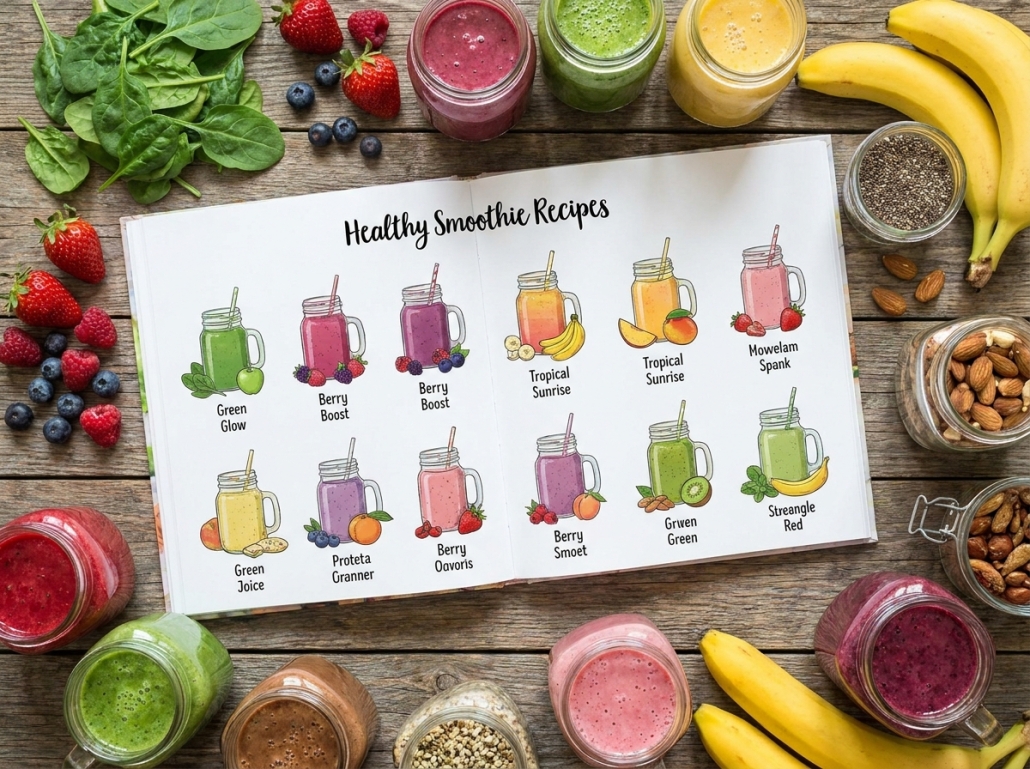
Healthy Smoothie Recipes: 10 Nutritious Combinations for Easy, Delicious Drinks
Smoothies are one of the easiest ways to combine several nutritious foods in one convenient drink. With the right ingredients, a homemade smoothie can provide fruit, vegetables, protein, healthy fats, fiber, vitamins, minerals, and plenty of flavor without requiring complicated cooking. Whether you need a quick breakfast, an afternoon snack, or a refreshing post-workout option, healthy smoothie recipes can fit easily into your daily routine.
However, not every smoothie is automatically healthy. Some store-bought or homemade combinations can contain large amounts of added sugar from sweetened yogurt, syrups, flavored milk, or fruit juice. The better approach is to build your smoothie around whole foods and balance naturally sweet ingredients with protein, fiber, and healthy fats.
In this guide, you will discover 10 nutritious smoothie combinations that are simple to prepare and easy to customize. From a creamy banana peanut butter smoothie to a refreshing green smoothie and a colorful berry blend, these recipes offer different flavors and nutritional benefits.
Why Healthy Smoothies Are a Smart Choice for Everyday Nutrition
A well-balanced smoothie can make healthy eating more convenient, especially on busy mornings when preparing a full meal feels difficult. Because you can blend several ingredients together within minutes, smoothies provide an efficient way to include more fruits, vegetables, whole grains, nuts, seeds, and other nutrient-rich foods in your diet.
Another advantage is flexibility. You do not need to follow one strict smoothie formula. Instead, you can adjust ingredients according to your taste, nutritional needs, and what you already have in your kitchen. For example, leafy greens can add nutrients without dramatically changing the flavor when combined with naturally sweet fruits such as bananas or mangoes.
The key is balance. A nutritious smoothie should ideally contain a source of produce, protein, fiber, and healthy fat. You can use Greek yogurt, milk, soy milk, tofu, or nut butter for protein. Chia seeds, flaxseeds, oats, fruits, and vegetables can increase fiber. Avocado, nuts, seeds, and natural nut butter can contribute healthy fats.
It is also important to pay attention to portion sizes. Blending several calorie-dense ingredients into one glass can make the drink much more filling and energy-dense than expected. Therefore, focus on quality and balance rather than simply adding as many ingredients as possible.
How to Build a Balanced and Nutritious Smoothie
Before jumping into the recipes, it helps to understand a simple smoothie-building formula. Start with a liquid base, add fruits or vegetables, include a protein source, add fiber-rich ingredients, and finish with healthy fats or flavor boosters.
Choose a Healthy Liquid Base
Unsweetened milk, soy milk, oat milk, almond milk, or plain water can work well. Coconut water can also provide a refreshing option. If you are already adding naturally sweet fruit, choosing an unsweetened liquid can help keep the overall sugar content reasonable.
Add Fruits and Vegetables for Vitamins and Minerals
Fruit gives smoothies natural sweetness, flavor, color, and nutrients. Bananas, berries, mangoes, pineapple, apples, peaches, and oranges are popular choices. Vegetables such as spinach, kale, cucumber, carrots, and cooked beetroot can also work surprisingly well.
Include Protein and Fiber
Protein helps make a smoothie more satisfying. Greek yogurt, plain yogurt, soy milk, tofu, cottage cheese, or nut butter can provide protein. Meanwhile, oats, chia seeds, flaxseeds, fruits, and vegetables contribute fiber.
Add Healthy Fats and Flavor
A small amount of peanut butter, almond butter, chia seeds, flaxseeds, or avocado can improve texture while adding healthy fats. Cinnamon, ginger, unsweetened cocoa powder, vanilla, or fresh mint can add flavor without relying on large amounts of added sugar.
10 Healthy Smoothie Recipes to Try at Home
These 10 healthy smoothie combinations give you plenty of variety. Each recipe uses accessible ingredients and can be adjusted according to your preferred texture and sweetness.
1. Banana Peanut Butter Smoothie for a Filling Breakfast
The banana peanut butter smoothie is a classic combination because it delivers a naturally creamy texture and rich flavor while combining carbohydrates, protein, and healthy fats.
Ingredients
- 1 ripe banana
- 1 tablespoon natural peanut butter
- ¾ cup unsweetened milk
- ¼ cup plain Greek yogurt
- 1 tablespoon rolled oats
- A pinch of cinnamon
- Ice, if desired
How to Make It
Add all the ingredients to a blender and blend until smooth. If the mixture is too thick, add a little more milk. If you prefer a colder smoothie, add several ice cubes before blending.
Bananas provide natural sweetness and a creamy consistency, while peanut butter adds richness. Greek yogurt contributes protein, and oats add fiber and texture.
This smoothie works particularly well for breakfast because it is more substantial than a simple fruit drink. You can also add a teaspoon of chia seeds for additional fiber.
2. Berry Yogurt Smoothie for an Antioxidant-Rich Drink
A berry yogurt smoothie combines the bright flavor of berries with creamy yogurt to create a refreshing drink that works well for breakfast or an afternoon snack.
Ingredients
- 1 cup mixed berries
- ½ cup plain Greek yogurt
- ¾ cup unsweetened milk
- 1 tablespoon chia seeds
- ½ banana
- Ice, if desired
How to Make It
Place everything into a blender and blend until creamy. Frozen berries work especially well because they create a thick, cold smoothie without requiring much ice.
Strawberries, blueberries, raspberries, and blackberries all work well in this recipe. Berries are naturally flavorful, so there is usually little need for added sugar.
For an even thicker smoothie, reduce the amount of liquid. You can also add a spoonful of oats if you want more fiber and a more filling texture.
3. Green Spinach Smoothie for an Easy Vegetable Boost
Green smoothies offer a simple way to include leafy vegetables in your daily meals. Spinach has a mild flavor, making it especially easy to combine with sweet fruits.
Ingredients
- 1 cup fresh spinach
- 1 banana
- ½ cup pineapple
- ¾ cup unsweetened milk or water
- 1 tablespoon chia seeds
- Small piece of fresh ginger
- Ice
How to Make It
Blend the liquid, spinach, banana, pineapple, ginger, and chia seeds until completely smooth. Add ice and blend again if you want a colder drink.
Pineapple and banana provide sweetness that balances the earthy taste of spinach. Ginger adds a fresh, slightly spicy flavor.
If you are new to green smoothies, start with a smaller amount of spinach and gradually increase it as you become comfortable with the flavor.
4. Mango Coconut Smoothie for a Tropical Refreshment
When you want something bright and refreshing, a mango coconut smoothie brings tropical flavors together in a simple combination.
Ingredients
- 1 cup ripe or frozen mango
- ¾ cup unsweetened coconut milk beverage
- ½ banana
- ½ cup plain yogurt
- 1 tablespoon ground flaxseed
- Ice
How to Make It
Blend all ingredients until smooth and creamy. Frozen mango can make the smoothie especially thick and refreshing.
Mango provides natural sweetness and a vibrant color, while yogurt adds protein and creaminess. Flaxseed contributes fiber and healthy fats.
For a slightly tangier flavor, add a small squeeze of fresh lime juice.
5. Avocado Spinach Smoothie for Creamy Healthy Fats
Avocado gives smoothies a naturally creamy consistency without requiring heavy cream or large amounts of dairy.
Ingredients
- ½ ripe avocado
- 1 cup spinach
- ½ banana
- ¾ cup unsweetened milk
- 1 tablespoon chia seeds
- A small squeeze of lime juice
- Ice
How to Make It
Blend all ingredients until smooth. Add additional liquid gradually if the smoothie becomes too thick.
Avocado contributes healthy fats and creates a silky texture. Spinach adds vegetables, while banana provides natural sweetness.
The lime juice helps brighten the flavor and prevents the combination from tasting too heavy.
6. Oatmeal Banana Smoothie for a Quick Breakfast
An oatmeal smoothie can be especially useful when you want a quick breakfast that feels more substantial than a fruit-only drink.
Ingredients
- 1 banana
- ¼ cup rolled oats
- ¾ cup unsweetened milk
- ½ cup plain Greek yogurt
- 1 tablespoon peanut or almond butter
- ½ teaspoon cinnamon
- Ice
How to Make It
Add the oats and liquid to the blender first. Then add the remaining ingredients and blend until smooth.
Oats provide complex carbohydrates and fiber, while yogurt and nut butter help increase protein and satiety. Cinnamon adds warmth and flavor without needing additional sweeteners.
For a smoother consistency, let the oats soak in the milk for a few minutes before blending.
7. Pineapple Ginger Smoothie for a Refreshing Fruit Combination
Pineapple and ginger create a refreshing flavor combination that is especially appealing on warm days.
Ingredients
- 1 cup pineapple chunks
- ½ banana
- ¾ cup unsweetened yogurt or milk
- Small piece of fresh ginger
- 1 tablespoon chia seeds
- Ice
How to Make It
Blend the pineapple, banana, liquid, ginger, and chia seeds until smooth. Add ice and blend again.
Pineapple brings a naturally sweet and tangy flavor, while ginger provides a warming contrast. Chia seeds add texture and fiber.
If you prefer a thinner smoothie, increase the liquid slightly.
8. Chocolate Banana Protein Smoothie for a Healthier Sweet Treat
Chocolate does not have to mean an overly sugary drink. Unsweetened cocoa powder can provide rich chocolate flavor while allowing you to control the amount of added sugar.
Ingredients
- 1 banana
- 1 tablespoon unsweetened cocoa powder
- ¾ cup unsweetened milk
- ½ cup Greek yogurt
- 1 tablespoon peanut butter
- 1 tablespoon rolled oats
- Ice
How to Make It
Blend all ingredients until smooth and creamy. Add a little more milk if necessary.
The banana provides natural sweetness, while cocoa delivers the chocolate flavor. Greek yogurt and peanut butter help make the smoothie more filling.
For a stronger chocolate taste, add another small amount of unsweetened cocoa powder rather than adding sugar.
9. Carrot Orange Smoothie for a Colorful Vitamin-Rich Drink
Carrots and oranges create a naturally bright smoothie with a refreshing citrus flavor.
Ingredients
- 1 small carrot, chopped
- 1 orange, peeled
- ½ banana
- ½ cup plain yogurt
- ½ cup water
- Small piece of fresh ginger
- Ice
How to Make It
Chop the carrot into small pieces so your blender can process it more easily. Add all ingredients and blend until smooth.
The orange provides citrus flavor and natural sweetness, while carrot adds vegetables and a vibrant color. Ginger gives the drink a refreshing kick.
If your blender struggles with raw carrot, grate the carrot first or lightly steam it and allow it to cool before blending.
10. Strawberry Chia Smoothie for a Fiber-Focused Snack
Strawberries and chia seeds make a simple combination that is flavorful, colorful, and easy to prepare.
Ingredients
- 1 cup strawberries
- ½ banana
- ¾ cup unsweetened milk
- ½ cup Greek yogurt
- 1 tablespoon chia seeds
- A few drops of vanilla extract
- Ice
How to Make It
Blend the strawberries, banana, milk, yogurt, chia seeds, vanilla, and ice until smooth.
The strawberries provide a naturally sweet and refreshing flavor, while chia seeds add fiber and healthy fats. Greek yogurt also contributes protein and creates a creamy consistency.
For a thicker smoothie bowl, reduce the liquid and add toppings such as sliced strawberries, oats, or chopped nuts.
How to Make Your Smoothies Healthier Without Sacrificing Flavor
A few simple changes can transform an ordinary smoothie into a more balanced meal or snack. First, choose whole fruits instead of fruit juice. Whole fruit provides fiber and generally makes the smoothie more satisfying.
Next, avoid automatically adding sugar, honey, or syrup. If your smoothie tastes too tart, start with a ripe banana, mango, dates, or another naturally sweet fruit. You may discover that you need far less added sweetener than expected.
You should also include a protein source when you want your smoothie to keep you full. Greek yogurt, plain yogurt, soy milk, tofu, or nut butter can all help.
Finally, remember that more ingredients do not necessarily mean a healthier smoothie. A simple combination of fruit, vegetables, protein, fiber, and healthy fat can be more useful than blending ten or fifteen ingredients together.
Common Healthy Smoothie Mistakes to Avoid
One common mistake is turning a smoothie into a liquid dessert by combining several sweet ingredients with juice, sweetened yogurt, honey, and flavored milk. Although the drink may taste delicious, the overall sugar and calorie content can rise quickly.
Another mistake is leaving out protein. A fruit-only smoothie may taste refreshing but may not keep you satisfied for very long. Adding yogurt, soy milk, tofu, or nut butter can create a more balanced drink.
Using too much nut butter, avocado, oats, or other calorie-dense ingredients can also make portions larger than intended. These foods can absolutely fit into a healthy diet, but moderation still matters.
Finally, do not rely exclusively on smoothies for your fruit and vegetable intake. Whole foods still have an important place in a balanced diet because eating them provides chewing, texture, and variety.
Tips for Preparing Healthy Smoothies Faster
Smoothie preparation does not have to become a daily chore. You can save time by washing and chopping fruits and vegetables ahead of time.
Create freezer packs containing measured portions of banana, berries, mango, pineapple, spinach, or other ingredients. When you need a smoothie, simply place a prepared pack into the blender and add your liquid and protein source.
You can also keep staples such as oats, chia seeds, flaxseed, cocoa powder, peanut butter, and cinnamon readily available.
For busy mornings, prepare the ingredients the night before and refrigerate them. However, avoid storing blended smoothies for unnecessarily long periods. Freshly blended smoothies generally provide the best texture and flavor.
How to Customize Smoothie Recipes for Your Goals
The best smoothie recipe is one that fits your eating pattern and preferences. If you want a breakfast smoothie, make it more substantial by including protein, fiber, and healthy fats.
If you want a lighter snack, use a smaller portion and focus on fruit or vegetables with a modest protein source.
For people who prefer dairy-free options, replace regular milk and yogurt with unsweetened soy milk, almond milk, oat milk, coconut-based alternatives, or suitable plant-based yogurt.
You can also adjust the thickness. More liquid produces a thinner drink, while frozen fruit, yogurt, oats, chia seeds, and avocado create a thicker consistency.
Most importantly, experiment. Try different fruit combinations, rotate your leafy greens, and use seasonal ingredients whenever possible.
Make Healthy Smoothies a Simple Part of Your Routine
Healthy smoothies can make nutritious eating easier without making it complicated. You do not need expensive ingredients, complicated recipes, or a long list of supplements to create a satisfying smoothie. A few basic whole foods can provide plenty of flavor and nutritional variety.
The 10 combinations in this guide give you a starting point, but you can easily create your own recipes. Try pairing berries with yogurt and chia seeds, mango with spinach and ginger, or banana with oats and nut butter.
The most useful approach is to think about balance rather than perfection. Include fruits or vegetables, add a protein source, incorporate fiber, and choose healthy fats where appropriate. Then adjust the flavor and consistency until you find combinations you genuinely enjoy.
Once you discover a few favorites, smoothie preparation can become one of the easiest ways to support a varied and nutritious eating routine.
Frequently Asked Questions About Healthy Smoothie Recipes
Are homemade smoothies healthy?
Yes. Homemade smoothies can be nutritious when they emphasize whole fruits, vegetables, protein, fiber, and healthy fats. The main thing to watch is the amount of added sugar and calorie-dense ingredients.
What is the healthiest thing to put in a smoothie?
There is no single healthiest ingredient. A balanced combination is more important. Fruits, leafy vegetables, plain yogurt, soy milk, oats, chia seeds, flaxseeds, nuts, and nut butter can all contribute useful nutrients.
Are smoothies good for breakfast?
A well-balanced smoothie can work well as breakfast. Include protein and fiber alongside fruit or vegetables so the drink is more satisfying.
Can I drink a smoothie every day?
Many people can enjoy a smoothie regularly as part of a varied diet. However, variety matters. Rotate your fruits, vegetables, protein sources, and other ingredients instead of consuming exactly the same combination every day.
How can I make a smoothie without adding sugar?
Use naturally sweet fruits such as ripe bananas, mangoes, pineapple, or berries. Also choose unsweetened milk and plain yogurt rather than sweetened varieties.
Are green smoothies actually healthy?
Green smoothies can be a convenient way to include leafy vegetables. However, their nutritional value depends on the complete recipe. A smoothie containing spinach, fruit, protein, and fiber is generally more balanced than one made mostly from fruit juice.
What can I use instead of milk in smoothies?
You can use water, unsweetened soy milk, almond milk, oat milk, coconut-based beverages, or other suitable alternatives. Your choice will affect the flavor, texture, and nutritional profile.
How do I make a smoothie more filling?
Add protein and fiber. Greek yogurt, soy milk, tofu, nut butter, oats, chia seeds, and flaxseeds are useful options. You can also include avocado for a creamy texture and healthy fats.
Can I use frozen fruit for smoothies?
Absolutely. Frozen fruit can make smoothies cold and creamy while reducing the need for ice. Frozen berries, bananas, mangoes, and pineapple are particularly convenient.
What is a good healthy smoothie for weight management?
Rather than relying on one specific smoothie, focus on balanced portions. Choose whole fruit, vegetables, a protein source, and fiber while limiting added sugars and oversized portions of calorie-dense ingredients. Your overall eating pattern matters more than one smoothie.


Leave a Reply
Want to join the discussion?Feel free to contribute!