
Prioritize Whole Foods Over Processed Meals

15 Healthy Dinner Recipes That Are Quick and Easy to Make

Finding time to prepare a healthy dinner can feel difficult when the day has been busy. Between work, family responsibilities, errands, and everything else competing for your attention, it is tempting to reach for takeout or prepare whatever happens to be quickest. However, healthy eating does not have to mean spending hours in the kitchen. With the right ingredients and a few simple cooking methods, you can prepare nutritious, satisfying meals in 30 minutes or less.

A good healthy dinner should provide a balance of protein, complex carbohydrates, vegetables, and healthy fats while still tasting enjoyable. Fortunately, there are countless combinations that make this possible. From colorful chicken stir-fries and hearty salmon bowls to quick vegetable pasta and bean-based meals, you can keep dinner both nutritious and interesting.

These 15 healthy dinner recipes are designed for busy weeknights when you want something wholesome without complicated preparation. Most use everyday ingredients, require minimal equipment, and can be adjusted according to your preferences. They are also flexible enough for families, meal prep, or anyone trying to eat more balanced meals.

Whether your goal is to eat more vegetables, increase your protein intake, reduce your reliance on processed foods, or simply make dinner easier, these recipes give you practical ideas to start with.

Why Quick and Healthy Dinner Recipes Make Weeknight Eating Easier

A healthy dinner does not need to be complicated, expensive, or time-consuming. In fact, simple meals can often make healthy eating more sustainable because they reduce the effort required to prepare food after a long day. When you have several reliable recipes you can make quickly, you are less likely to depend on fast food or highly processed convenience meals.

Another advantage is that quick home-cooked dinners give you greater control over what goes into your food. You can choose lean proteins, fresh vegetables, whole grains, healthy oils, herbs, and spices while controlling the amount of salt, added sugar, and saturated fat.

The key is preparation. Keep versatile ingredients such as eggs, chicken, canned beans, brown rice, whole-grain pasta, frozen vegetables, tomatoes, onions, garlic, and leafy greens available. These ingredients can become the foundation for many different meals.

You also do not have to cook everything from scratch every night. Frozen vegetables, canned beans, prewashed greens, leftover grains, and cooked proteins can significantly reduce preparation time without preventing you from creating nutritious meals.

With that in mind, here are 15 easy healthy dinner ideas you can add to your weekly meal rotation.

1. Quick Chicken and Vegetable Stir-Fry

Chicken and vegetable stir-fry is one of the easiest healthy dinner recipes for a busy weeknight because it combines lean protein and colorful vegetables in one pan.

How to Make a Healthy Chicken Stir-Fry

Slice boneless, skinless chicken breast into small pieces and cook it in a little olive or avocado oil. Once the chicken is nearly cooked, add vegetables such as bell peppers, broccoli, carrots, onions, and snap peas.

For the sauce, combine low-sodium soy sauce with garlic, ginger, a small amount of honey, and a splash of water. Add the sauce to the pan and stir everything together until the vegetables are tender but still slightly crisp.

Serve the stir-fry with brown rice, quinoa, or another whole grain. If you are short on time, frozen mixed vegetables can work perfectly well.

Approximate cooking time: 20–25 minutes.

2. Baked Salmon With Vegetables and Brown Rice

Baked salmon provides protein and healthy fats while requiring very little hands-on preparation. It is therefore an excellent choice when you want a nutritious dinner without spending much time cooking.

Easy Oven-Baked Salmon Dinner

Place salmon fillets on a baking sheet and season them with garlic, black pepper, paprika, lemon juice, and a small amount of olive oil. Arrange broccoli, zucchini, asparagus, or green beans around the fish.

Bake until the salmon is cooked through and flakes easily. Meanwhile, prepare brown rice or quinoa as the side dish.

You can also prepare extra salmon and grains for lunch the next day. Simply store them in airtight containers and refrigerate promptly.

Approximate cooking time: 20–30 minutes.

3. Healthy One-Pot Chicken and Brown Rice

One-pot meals are particularly useful when you want a healthy dinner that creates minimal cleanup. This chicken and brown rice recipe is hearty enough to satisfy you while still providing a good mixture of protein, whole grains, and vegetables.

Simple One-Pot Chicken Rice Recipe

Start by sautéing chopped onions and garlic in a large pot. Add diced chicken breast and cook until lightly browned. Stir in brown rice, chopped tomatoes, carrots, peas, and low-sodium chicken stock.

Season with paprika, thyme, black pepper, and other herbs you enjoy. Cover the pot and allow everything to cook until the rice becomes tender and the chicken is fully cooked.

For an even faster version, use leftover cooked rice and reduce the cooking time considerably.

Approximate cooking time: 30 minutes.

4. Easy Healthy Vegetable Pasta

Pasta can absolutely be part of a balanced dinner. The secret is choosing nutrient-rich ingredients and pairing the pasta with plenty of vegetables and protein.

Quick Whole-Grain Pasta With Vegetables

Cook whole-grain pasta according to the package instructions. While it cooks, sauté garlic, onions, tomatoes, spinach, mushrooms, zucchini, and bell peppers in olive oil.

Add the cooked pasta and toss everything together. For additional protein, include grilled chicken, tuna, beans, lentils, or chickpeas.

Finish with herbs, black pepper, and a modest amount of grated cheese if desired.

This simple dinner proves that healthy meals do not need to be bland or restrictive.

Approximate cooking time: 20 minutes.

5. Healthy Chicken and Avocado Wraps

Chicken wraps are convenient, customizable, and easy to prepare. They are especially useful when you need dinner on the table quickly.

High-Protein Chicken Wrap With Fresh Vegetables

Fill a whole-grain tortilla with cooked chicken, avocado, lettuce, tomatoes, cucumber, onions, and grated carrots. Add a simple dressing made from plain yogurt, lemon juice, garlic, and black pepper.

Roll the tortilla tightly and serve immediately.

If you have leftover chicken from another meal, this recipe becomes even faster. You can also replace chicken with beans, tuna, eggs, or grilled tofu.

Approximate preparation time: 10–15 minutes.

6. Quick and Healthy Egg Fried Rice With Vegetables

Egg fried rice is an excellent way to transform leftover rice into a satisfying dinner. It also provides a practical opportunity to use vegetables that might otherwise go to waste.

Easy Vegetable Egg Fried Rice

Heat a small amount of oil in a large skillet. Add chopped onions, carrots, peas, bell peppers, and other vegetables you have available.

Push the vegetables to one side and scramble two or three eggs in the same pan. Add cooked brown rice and combine everything.

Season with low-sodium soy sauce, garlic, ginger, and black pepper. For extra protein, add cooked chicken, shrimp, tofu, or beans.

Using already-cooked rice keeps this dinner particularly quick.

Approximate cooking time: 15 minutes.

7. Healthy Tuna and Bean Salad Bowl

When you want a dinner that requires almost no cooking, a tuna and bean salad is an excellent option. It is packed with protein, fiber, and vegetables.

Protein-Rich Tuna Salad for Dinner

Combine canned tuna with cooked or canned beans, chopped tomatoes, cucumber, onions, sweet corn, and leafy greens.

For the dressing, mix olive oil with lemon juice, black pepper, garlic, and herbs. Toss everything together and serve with whole-grain bread or a small portion of brown rice.

Choose tuna packed in water when appropriate, and rinse canned beans before using them to reduce some of the added sodium.

Approximate preparation time: 10 minutes.

8. Easy Chickpea and Vegetable Curry

Chickpeas provide plant-based protein and fiber, making them a useful ingredient for satisfying meat-free dinners. A simple chickpea curry can also be prepared with affordable pantry staples.

Quick Healthy Chickpea Curry

Sauté onions, garlic, and ginger in a little oil. Add chopped tomatoes, chickpeas, spinach, carrots, and your favorite curry spices.

Allow the mixture to simmer until the vegetables are tender and the flavors come together. You can add a small amount of light coconut milk if you want a creamier texture.

Serve with brown rice or a modest portion of whole-grain flatbread.

This meal is filling, flavorful, and easy to customize with whatever vegetables you have available.

Approximate cooking time: 25 minutes.

9. Grilled Chicken and Sweet Potato Bowl

A chicken and sweet potato bowl combines lean protein, complex carbohydrates, vegetables, and healthy fats in one convenient meal.

Balanced Chicken Sweet Potato Dinner

Season diced chicken breast with paprika, garlic, black pepper, and herbs. Grill or pan-cook the chicken until thoroughly cooked.

Meanwhile, roast or microwave diced sweet potatoes. Add leafy greens, tomatoes, cucumber, avocado, and the cooked chicken to a bowl.

Top with a simple yogurt-and-lemon dressing.

You can prepare several bowls at once and store the components separately for easy meals during the week.

Approximate cooking time: 25–30 minutes.

10. Quick Shrimp and Vegetable Skillet

Shrimp cooks quickly, making it one of the best proteins for nights when you have limited time.

Simple Healthy Shrimp Skillet Recipe

Heat olive oil in a skillet and add garlic, onions, bell peppers, zucchini, broccoli, and tomatoes. Cook until the vegetables begin to soften.

Add cleaned shrimp and season with paprika, black pepper, lemon juice, and herbs. Cook until the shrimp becomes opaque and fully cooked.

Serve with brown rice, quinoa, or whole-grain couscous.

Because shrimp cooks quickly, avoid overcooking it. This helps maintain a tender texture.

Approximate cooking time: 15–20 minutes.

11. Healthy Lentil and Vegetable Soup

Lentil soup is an affordable and nutritious dinner that can provide plenty of fiber and plant-based protein. It is also ideal for batch cooking.

Easy Lentil Soup for a Busy Night

Sauté onions, garlic, carrots, and celery in a large pot. Add rinsed lentils, chopped tomatoes, spinach, and vegetable or chicken stock.

Season with cumin, paprika, thyme, black pepper, and other herbs. Simmer until the lentils become tender.

For a faster version, use pre-cooked lentils.

Serve the soup with whole-grain bread and a side salad for a more complete dinner.

Approximate cooking time: 25–35 minutes.

12. Healthy Turkey or Chicken Lettuce Wraps

Lettuce wraps provide a lighter alternative to traditional wraps while still allowing you to enjoy a flavorful, filling meal.

Quick Minced Chicken Lettuce Wraps

Cook lean minced chicken or turkey with onions, garlic, ginger, carrots, and bell peppers. Add a small amount of low-sodium soy sauce and black pepper for flavor.

Spoon the mixture into crisp lettuce leaves and top with chopped cucumber, avocado, or tomatoes.

You can also serve the filling over brown rice if you want a more substantial dinner.

Approximate cooking time: 20 minutes.

13. Easy Black Bean and Avocado Tacos

Black bean tacos are an inexpensive plant-based dinner that can be prepared quickly. They are also a good way to add more legumes and vegetables to your diet.

Healthy Vegetarian Tacos With Beans

Warm whole-grain or corn tortillas and fill them with seasoned black beans, shredded cabbage, tomatoes, onions, avocado, and fresh herbs.

Add a squeeze of lime or lemon juice. For additional protein, include Greek yogurt or a small amount of grated cheese.

You can prepare the beans in advance and refrigerate them for several days.

Approximate preparation time: 15 minutes.

14. Quick Garlic Chicken With Spinach

Garlic chicken with spinach is a simple one-pan dinner that delivers protein and vegetables without requiring complicated preparation.

Easy Garlic Chicken and Spinach Skillet

Cut chicken breast into bite-sized pieces and season with garlic, paprika, black pepper, and herbs. Cook the chicken in a skillet with a small amount of olive oil.

Once the chicken is nearly done, add fresh spinach and sliced tomatoes. Continue cooking until the spinach wilts and the chicken reaches a safe internal temperature.

Serve with quinoa, brown rice, or roasted sweet potatoes.

For extra flavor, add lemon juice just before serving.

Approximate cooking time: 20 minutes.

15. Healthy Quinoa, Vegetable, and Chickpea Bowl

A quinoa and chickpea bowl is a flexible meat-free dinner that works especially well for meal preparation. It combines plant-based protein, whole grains, vegetables, and healthy fats.

Easy Quinoa Chickpea Dinner Bowl

Cook quinoa according to the package instructions. While it cooks, prepare chickpeas, cucumber, tomatoes, carrots, spinach, and avocado.

Combine everything in a bowl and drizzle with a dressing made from lemon juice, olive oil, garlic, and herbs.

You can also add grilled chicken, boiled eggs, tofu, or fish if you prefer more protein.

The beauty of this meal is its flexibility. Change the vegetables, seasonings, and protein depending on what you have available.

Approximate preparation time: 20–25 minutes.

How to Make Healthy Weeknight Dinners Faster and Easier

Preparing healthy dinners becomes much easier when you remove unnecessary steps from the process. Instead of trying to cook an elaborate meal every evening, create a simple system that allows you to reuse ingredients throughout the week.

Prepare Ingredients Ahead of Time

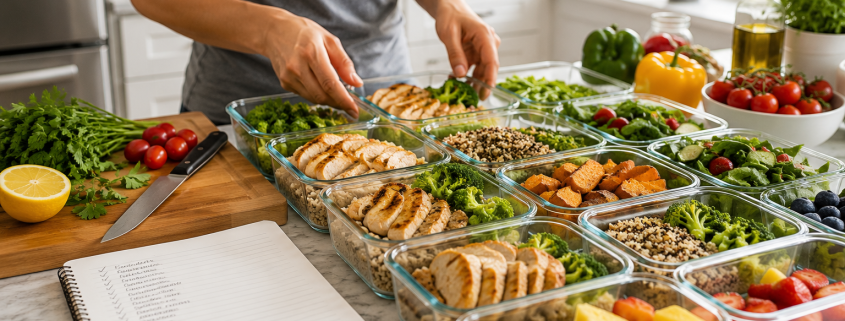
Wash and chop vegetables when you bring them home. Cook a batch of brown rice, quinoa, beans, or another whole grain and store portions in the refrigerator.

You can also prepare chicken or other proteins in advance. Then, during the week, combine those ingredients differently so that your meals do not feel repetitive.

Keep Healthy Pantry Staples Available

A well-stocked pantry can save you from ordering takeout when you are tired.

Useful staples include:

  • Canned beans
  • Lentils
  • Brown rice
  • Whole-grain pasta
  • Canned tomatoes
  • Tuna
  • Oats
  • Whole-grain tortillas
  • Olive oil
  • Herbs and spices
  • Low-sodium sauces

Frozen vegetables are also extremely useful because they last longer and require little preparation.

Use One-Pan and One-Pot Cooking Methods

Whenever possible, choose recipes that use one skillet, baking sheet, or pot. These methods reduce both cooking time and cleanup.

Stir-fries, skillet meals, sheet-pan dinners, soups, and one-pot rice dishes can make weeknight cooking much more manageable.

How to Build a Balanced Healthy Dinner

You do not need to follow a complicated meal plan to create a nutritious dinner. Instead, think about including several important food groups on your plate.

Start with a protein source such as chicken, fish, eggs, beans, lentils, tofu, or lean meat. Next, add plenty of vegetables for vitamins, minerals, fiber, and other beneficial nutrients.

Then include a source of quality carbohydrates such as brown rice, sweet potatoes, quinoa, whole-grain pasta, or beans. Finally, add a moderate amount of healthy fat from foods such as avocado, nuts, seeds, or olive oil.

Portion sizes will vary depending on individual needs, activity levels, age, and health goals. Therefore, focus on overall balance rather than trying to make every meal perfectly measured.

Healthy Dinner Ideas for Meal Prep and Busy Families

Meal prepping does not have to mean eating the exact same meal every day. Instead, prepare a few basic components that can be combined in different ways.

For example, you could cook chicken, brown rice, roasted vegetables, and beans on Sunday. On Monday, combine chicken and rice with vegetables. On Tuesday, use the chicken in wraps. On Wednesday, add the beans to a salad bowl.

This approach saves time while giving you variety.

Families can also customize meals by serving ingredients separately. For example, place chicken, rice, vegetables, avocado, and sauce on the table and allow everyone to create their own bowl.

This method makes healthy eating more practical because each person can choose the foods and portions they prefer.

Final Thoughts: Make Healthy Dinner a Simple Daily Habit

Eating a healthy dinner does not require expensive ingredients, complicated recipes, or hours in the kitchen. The most sustainable approach is to build a collection of simple meals you genuinely enjoy and can prepare consistently.

The 15 recipes in this guide give you plenty of options, from quick chicken stir-fries and baked salmon to vegetarian tacos, lentil soup, chickpea curry, and nutritious grain bowls. More importantly, they show that healthy food can be convenient, flavorful, and satisfying.

Start with two or three recipes that appeal to you. Buy the ingredients you need, prepare a few components ahead of time, and gradually expand your weekly dinner rotation.

With a little planning, you can make nutritious home-cooked meals a normal part of your routine, even when your schedule is busy.

Frequently Asked Questions About Quick and Healthy Dinner Recipes

What is the easiest healthy dinner to make?

A vegetable and protein bowl, tuna and bean salad, egg fried rice, or chicken wrap can be among the easiest options. These meals require little preparation and can often be assembled using leftovers or ready-to-use ingredients.

What can I make for a healthy dinner in 20 minutes?

Try shrimp and vegetables, vegetable pasta, chicken wraps, egg fried rice, black bean tacos, tuna salad, or garlic chicken with spinach. These meals can generally be prepared quickly when ingredients are ready.

What should a healthy dinner include?

A balanced dinner can include a protein source, vegetables, a quality carbohydrate, and a source of healthy fat. Examples include grilled chicken with vegetables and brown rice or salmon with sweet potato and greens.

Are healthy dinners good for weight management?

Healthy dinners can support weight management when they provide satisfying nutrients without excessive calories. However, overall dietary intake, physical activity, sleep, individual needs, and other factors also matter.

Can I prepare these healthy dinners ahead of time?

Yes. Many of these recipes work well for meal preparation. Chicken, rice, quinoa, beans, lentils, roasted vegetables, and chopped salad ingredients can often be prepared ahead and combined into different meals throughout the week.

Are frozen vegetables healthy for dinner recipes?

Yes. Frozen vegetables can be a convenient and nutritious option. They are especially useful when fresh vegetables are unavailable or when you need to prepare dinner quickly.

How can I make healthy dinners more flavorful?

Use herbs, spices, garlic, ginger, lemon or lime juice, fresh vegetables, and homemade sauces. Flavor does not have to come from excessive salt, sugar, or heavy sauces.

What are some affordable healthy dinner ideas?

Beans, lentils, eggs, brown rice, seasonal vegetables, potatoes, oats, canned fish, and whole grains can all form the basis of affordable healthy meals. Buying ingredients in larger quantities and cooking at home can also reduce costs.
 

Start Your Day Right: The Power of a Nutritious Breakfast

10 Easy Healthy Breakfast Recipes for Busy Mornings

Breakfast does not have to be complicated to be nutritious. When mornings feel rushed, it is easy to grab a sugary snack, skip breakfast altogether, or rely on heavily processed foods. However, a healthy breakfast can be quick, affordable, filling, and delicious when you know what to prepare.

The key is to build your morning meal around simple ingredients that provide protein, fiber, healthy fats, complex carbohydrates, vitamins, and minerals. These nutrients can help you feel satisfied and provide steady energy as you begin your day.

Whether you are heading to work, getting children ready for school, running errands, or simply trying to create a better morning routine, these easy healthy breakfast recipes can help. Most require only a few ingredients, and several can be prepared ahead of time.

From creamy overnight oats and fruit-packed smoothies to protein-rich egg wraps and whole-grain avocado toast, there is something here for different tastes and schedules.

Why a Healthy Breakfast Matters for Busy Mornings

A nutritious breakfast can make busy mornings easier because it gives you a simple opportunity to start the day with nourishing foods. While not everyone needs to eat immediately after waking, people who enjoy breakfast can benefit from choosing foods that provide lasting satisfaction rather than a quick burst of energy followed by hunger.

A balanced breakfast generally combines several food groups. For example, pairing eggs with whole-grain bread and vegetables provides protein, carbohydrates, fiber, and micronutrients. Similarly, Greek yogurt with fruit, nuts, and seeds offers protein, carbohydrates, healthy fats, and important vitamins and minerals.

Moreover, planning breakfast reduces the temptation to make rushed food choices. If you already have overnight oats in the refrigerator or smoothie ingredients portioned in the freezer, you can prepare breakfast in minutes.

Another advantage is flexibility. You do not need expensive ingredients or elaborate cooking skills to create a nutritious meal. Basic foods such as oats, eggs, bananas, beans, whole-grain bread, yogurt, vegetables, and seasonal fruit can form the foundation of many healthy breakfasts.

Therefore, instead of asking whether breakfast is “perfect,” focus on whether it is practical, nourishing, and satisfying enough to support your morning.

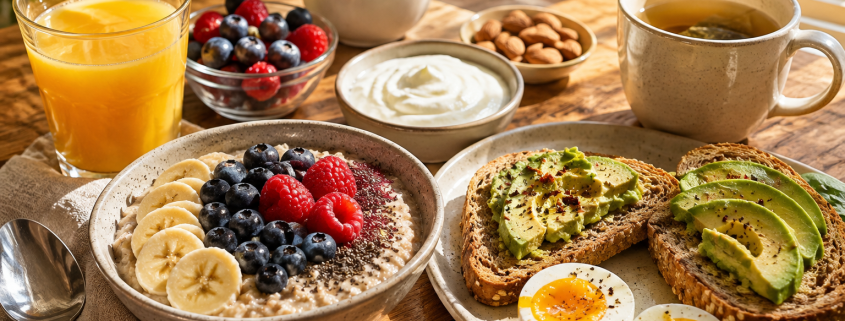
1. Creamy Overnight Oats With Banana and Chia Seeds

Overnight oats are one of the easiest healthy breakfast ideas because you prepare them the night before and simply take them from the refrigerator in the morning. They are especially useful when you have very little time to cook.

Ingredients

  • ½ cup rolled oats
  • ½ cup milk or unsweetened plant-based milk
  • ¼ cup plain yogurt
  • 1 tablespoon chia seeds
  • ½ banana, sliced
  • A small handful of nuts
  • Cinnamon to taste

How to Prepare

Combine the oats, milk, yogurt, chia seeds, and cinnamon in a jar or covered container. Stir thoroughly, then refrigerate overnight.

In the morning, add sliced banana and nuts. If the mixture is too thick, add a small amount of milk and stir.

The oats provide complex carbohydrates and fiber, while chia seeds contribute fiber and healthy fats. Yogurt can add protein, and banana provides natural sweetness.

You can also customize this recipe with berries, apples, peanut butter, coconut, or other fruits. Because you can prepare several portions at once, overnight oats are excellent for meal preparation.

2. Protein-Packed Vegetable Egg Wrap

If you prefer a savory breakfast, a vegetable egg wrap offers a quick combination of protein, vegetables, and carbohydrates. It takes only a few minutes to cook and can easily become a portable breakfast.

Ingredients

  • 2 eggs
  • 1 whole-grain tortilla or flatbread
  • ¼ cup chopped tomatoes
  • ¼ cup chopped bell pepper
  • A small handful of spinach
  • 1 tablespoon chopped onion
  • 1 teaspoon cooking oil
  • Black pepper and other preferred seasonings

How to Prepare

Heat the oil in a nonstick pan. Add the onion, bell pepper, tomatoes, and spinach and cook for two to three minutes.

Beat the eggs separately, then pour them into the pan. Stir gently until the eggs are cooked.

Place the egg mixture inside the tortilla and roll it into a wrap.

This breakfast is easy to modify. You can add beans, avocado, mushrooms, or a small amount of cheese. For extra protein, add cooked chicken or another lean protein source.

Because the vegetables cook quickly, this recipe works particularly well when you want a warm breakfast without spending much time in the kitchen.

3. Greek Yogurt, Fruit and Nut Breakfast Bowl

A yogurt breakfast bowl is another simple option when you want something nutritious without cooking. It takes approximately five minutes to assemble and can be adapted according to whatever fruit you have available.

Ingredients

  • 1 cup plain Greek yogurt or another high-protein yogurt
  • 1 banana or a handful of berries
  • 1 tablespoon chopped nuts
  • 1 tablespoon seeds
  • 2 tablespoons oats or low-sugar granola
  • Cinnamon
  • Optional: a small drizzle of honey

How to Prepare

Place the yogurt in a bowl. Add your fruit, oats, nuts, seeds, and cinnamon.

Mix everything together or arrange the ingredients separately for a more attractive breakfast bowl.

The combination of protein, fiber, and healthy fats can make this meal more satisfying than a breakfast based primarily on refined carbohydrates.

If you are watching your added sugar intake, choose plain yogurt and use fresh fruit for sweetness. You can also prepare the dry ingredients in small containers ahead of time, making morning assembly even faster.

4. Quick Avocado and Egg Whole-Grain Toast

Avocado toast has become popular because it is simple, versatile, and filling. Adding an egg makes it more substantial by increasing the protein content.

Ingredients

  • 1–2 slices whole-grain bread
  • ½ ripe avocado
  • 1 egg
  • Tomato slices
  • Black pepper
  • Optional: lemon juice, chili flakes, or herbs

How to Prepare

Toast the bread while you prepare the egg. You can boil, scramble, poach, or fry the egg according to your preference.

Mash the avocado onto the toast and add a little lemon juice and black pepper. Place the cooked egg on top and finish with tomato slices or herbs.

Whole-grain bread supplies carbohydrates and fiber, while avocado provides healthy fats. The egg contributes protein and several important nutrients.

For a more colorful breakfast, add cucumber, spinach, tomatoes, or grated carrots. Consequently, a basic piece of toast can become a nutrient-rich meal without requiring complicated preparation.

5. Banana and Peanut Butter Smoothie

A smoothie can be one of the fastest healthy breakfast recipes when you need something you can drink on the way to work or school.

Ingredients

  • 1 ripe banana
  • 1 tablespoon natural peanut butter
  • ½ cup plain yogurt
  • ½–1 cup milk
  • 1 tablespoon oats
  • A pinch of cinnamon
  • Ice, if desired

How to Prepare

Add all the ingredients to a blender and blend until smooth. If the smoothie is too thick, add more milk.

The banana provides natural sweetness and carbohydrates, while peanut butter adds healthy fats and protein. Yogurt can contribute additional protein, and oats add fiber and texture.

For variety, add spinach, cocoa powder, berries, or a small amount of grated ginger.

However, remember that smoothies can become very high in calories when you add large amounts of nut butter, sweeteners, juice, or other calorie-dense ingredients. Keep the portions balanced and focus on whole-food ingredients.

6. Healthy Breakfast Bean and Egg Bowl

Beans are an affordable source of protein and fiber, making them an excellent addition to a healthy breakfast. A simple bean and egg bowl can be prepared using leftover beans and vegetables from the previous day’s meals.

Ingredients

  • ½ cup cooked beans
  • 1–2 eggs
  • ¼ avocado
  • Chopped tomatoes
  • Chopped onions
  • Spinach or other leafy greens
  • Black pepper
  • Optional: a small amount of whole-grain bread

How to Prepare

Warm the cooked beans in a pan. Meanwhile, prepare the eggs separately.

Place the beans in a bowl and top with the eggs, vegetables, avocado, and greens. Season according to your taste.

This breakfast is particularly useful when you want a meal that keeps you satisfied for longer. The combination of beans and eggs provides substantial protein, while beans and vegetables contribute fiber.

You can also turn the ingredients into a breakfast wrap by placing everything inside a whole-grain tortilla.

7. Apple Cinnamon Oatmeal With Nuts

Hot oatmeal remains a practical breakfast choice because it is inexpensive, easy to prepare, and highly customizable. Adding fruit and nuts makes it more satisfying and flavorful.

Ingredients

  • ½ cup rolled oats
  • 1 cup water or milk
  • ½ apple, diced
  • 1 tablespoon chopped nuts
  • Cinnamon
  • Optional: a small amount of honey

How to Prepare

Combine the oats and liquid in a saucepan. Add the diced apple and cinnamon.

Cook over medium heat, stirring occasionally, until the oats become soft and creamy. Transfer to a bowl and top with nuts.

For an even quicker version, prepare the oatmeal in the microwave according to the oats’ instructions.

You can replace the apple with banana, pear, berries, or other fruit. Furthermore, adding seeds such as chia, flax, or pumpkin seeds can provide additional texture and nutrients.

The important thing is to keep the recipe simple enough that you will actually make it on busy mornings.

8. Whole-Grain Breakfast Sandwich With Egg and Vegetables

A homemade breakfast sandwich can be much more flexible than many commercially prepared options. With a few basic ingredients, you can make a balanced meal in less than ten minutes.

Ingredients

  • 1 whole-grain bread roll or English muffin
  • 1 egg
  • Tomato slices
  • Spinach or lettuce
  • Cucumber
  • Optional: a small slice of cheese
  • Black pepper

How to Prepare

Cook the egg in a nonstick pan. While it cooks, toast the bread.

Place the vegetables on the bottom half of the bread, add the egg, and finish with the remaining vegetables and top half of the bread.

If you are preparing breakfast for several people, cook several eggs at once and assemble the sandwiches individually.

This recipe also travels well. Wrap the sandwich in foil or a reusable food container and take it with you.

For additional flavor, use avocado, hummus, mustard, or fresh herbs instead of relying heavily on high-sodium sauces.

9. Quick Vegetable Omelet With Whole-Grain Toast

An omelet may sound more complicated than other breakfast options, but a simple vegetable omelet can be ready surprisingly quickly.

Ingredients

  • 2 eggs
  • Chopped tomatoes
  • Chopped bell peppers
  • Spinach
  • Onion
  • 1 teaspoon cooking oil
  • Black pepper
  • 1 slice whole-grain toast

How to Prepare

Whisk the eggs in a bowl.

Heat the oil in a pan and add the vegetables. Cook them briefly until they begin to soften.

Pour the eggs over the vegetables. Allow the mixture to cook until the bottom sets, then fold the omelet and continue cooking until the egg is fully cooked.

Serve with whole-grain toast.

This breakfast provides a convenient way to increase your vegetable intake early in the day. You can also use leftover cooked vegetables, which makes the recipe even faster.

Try different combinations such as mushrooms and spinach, tomatoes and onions, or peppers and herbs.

10. Healthy Breakfast Fruit and Oat Pancakes

You do not have to completely eliminate pancakes from a healthy breakfast. Instead, you can make a simple version using oats and banana rather than relying entirely on refined flour and added sugar.

Ingredients

  • 1 ripe banana
  • 1 egg
  • ½ cup blended or finely ground oats
  • ¼ teaspoon cinnamon
  • A small splash of milk if needed
  • 1 teaspoon cooking oil

How to Prepare

Mash the banana in a bowl. Add the egg, oats, and cinnamon and mix until combined.

If the batter seems too thick, add a small amount of milk.

Heat a lightly oiled pan over medium heat. Spoon small portions of batter into the pan and cook until bubbles appear and the edges become firm. Flip and cook the other side.

Serve with fresh fruit and plain yogurt.

Instead of covering the pancakes with large amounts of syrup or sugar, use sliced bananas, berries, or a small amount of nut butter for flavor.

How to Make Healthy Breakfasts Faster During the Week

The easiest way to maintain a healthy breakfast routine is to prepare before the busy morning arrives. Even five or ten minutes of preparation the night before can make a significant difference.

Prepare Breakfast Ingredients in Advance

Wash and chop vegetables, portion oats, boil eggs, wash fruit, and store ingredients in containers. This reduces the number of tasks you need to complete in the morning.

Create a Simple Breakfast Rotation

You do not need a different breakfast every day. Choose three or four favorites and rotate them throughout the week.

For example:

  • Monday: overnight oats
  • Tuesday: egg and vegetable wrap
  • Wednesday: smoothie
  • Thursday: avocado and egg toast
  • Friday: yogurt and fruit bowl

This approach reduces decision fatigue and makes grocery shopping easier.

Keep Healthy Staples Available

Stock your kitchen with ingredients that can be combined quickly. Oats, eggs, whole-grain bread, yogurt, bananas, beans, nuts, seeds, vegetables, and seasonal fruits can support many different breakfast recipes.

Frozen fruits and vegetables can also be useful because they last longer and require little preparation.

How to Build a Balanced Breakfast for Energy and Fullness

A healthy breakfast does not need to follow a complicated formula. Instead, think about combining several types of foods.

Start with a protein source such as eggs, yogurt, beans, milk, or nuts. Then add a source of high-fiber carbohydrates, such as oats, whole-grain bread, or fruit.

Next, include healthy fats from foods such as avocado, nuts, seeds, or natural nut butter.

Finally, add fruit or vegetables to increase the variety of vitamins, minerals, antioxidants, and fiber in the meal.

For example, a balanced breakfast could be eggs with whole-grain toast, avocado, and tomatoes. Another option could be Greek yogurt with oats, banana, chia seeds, and nuts.

This flexible approach is more practical than following strict breakfast rules. Your nutritional needs also vary depending on factors such as age, activity level, overall diet, and individual health goals.

Common Healthy Breakfast Mistakes to Avoid

Even foods marketed as healthy can become less nutritious when they contain excessive added sugar or when portions become very large.

One common mistake is choosing breakfast foods that are mostly refined carbohydrates. Sugary cereals, pastries, sweetened drinks, and similar foods may provide quick energy but may not keep you satisfied for long.

Another mistake is forgetting protein. A breakfast based only on fruit or toast may leave some people hungry again relatively quickly. Adding eggs, yogurt, beans, nuts, seeds, or another protein source can make the meal more filling.

It is also easy to underestimate beverages. Sweetened coffee drinks, sodas, and heavily sweetened juices can add significant amounts of sugar and calories.

Finally, do not assume that a healthy breakfast needs to be expensive. Simple foods such as oats, eggs, beans, bananas, seasonal vegetables, and whole grains can provide excellent nutritional value without a large grocery bill.

Make Your Mornings Easier With Simple Nutritious Meals

A healthy breakfast does not need to take 30 minutes, require expensive ingredients, or look like something from a restaurant. In fact, some of the most practical options can be prepared in five to ten minutes or made the night before.

The most important step is to create a breakfast routine that fits your real life. If mornings are hectic, choose recipes that require little cooking. If you prefer savory foods, keep eggs, beans, vegetables, and whole-grain bread available. If you prefer something sweet, use fruit, oats, yogurt, and nuts to create satisfying combinations.

Start with one or two recipes from this list rather than trying to change everything at once. Once you find meals you genuinely enjoy, make them part of your regular routine.

Ultimately, the best healthy breakfast is one that is nutritious, enjoyable, convenient, and realistic enough to prepare consistently.

Frequently Asked Questions About Easy Healthy Breakfast Recipes

What is a good healthy breakfast for a busy morning?

Good options include overnight oats, yogurt and fruit bowls, egg wraps, smoothies, avocado toast, and oatmeal. Choose a combination that provides protein, fiber, and nutrient-rich whole foods.

Can I prepare healthy breakfast recipes the night before?

Yes. Overnight oats, boiled eggs, chopped fruit, yogurt bowls, and smoothie ingredients can often be prepared or portioned ahead of time. Meal preparation can make busy mornings much easier.

What is the fastest healthy breakfast?

A yogurt and fruit bowl or smoothie can be prepared in just a few minutes. Overnight oats are also extremely convenient because you prepare them ahead of time.

Is oatmeal a healthy breakfast?

Oatmeal can be part of a healthy breakfast because oats provide carbohydrates and fiber. Adding protein, fruit, nuts, seeds, or yogurt can make the meal more balanced and satisfying.

Are eggs good for breakfast?

Eggs can be a nutritious breakfast food and are a convenient source of high-quality protein. Pairing them with vegetables and whole-grain foods can create a balanced meal.

What can I eat for breakfast instead of sugary cereal?

Try oatmeal with fruit and nuts, eggs with whole-grain toast, yogurt with berries and seeds, bean and egg bowls, or a banana and peanut butter smoothie.

How can I make breakfast healthier without spending more money?

Focus on affordable staples such as oats, eggs, beans, bananas, seasonal vegetables, whole-grain foods, and locally available fruits. Buying ingredients in larger quantities and preparing meals at home can also help control costs.

Do I have to eat breakfast every day?

Not necessarily. Individual eating patterns vary. If you choose to eat breakfast, focus on nutritious foods that fit your appetite, schedule, and overall dietary needs.

Healthy Smoothie Recipes: 10 Nutritious Combinations for Easy, Delicious Drinks

Smoothies are one of the easiest ways to combine several nutritious foods in one convenient drink. With the right ingredients, a homemade smoothie can provide fruit, vegetables, protein, healthy fats, fiber, vitamins, minerals, and plenty of flavor without requiring complicated cooking. Whether you need a quick breakfast, an afternoon snack, or a refreshing post-workout option, healthy smoothie recipes can fit easily into your daily routine.

However, not every smoothie is automatically healthy. Some store-bought or homemade combinations can contain large amounts of added sugar from sweetened yogurt, syrups, flavored milk, or fruit juice. The better approach is to build your smoothie around whole foods and balance naturally sweet ingredients with protein, fiber, and healthy fats.

In this guide, you will discover 10 nutritious smoothie combinations that are simple to prepare and easy to customize. From a creamy banana peanut butter smoothie to a refreshing green smoothie and a colorful berry blend, these recipes offer different flavors and nutritional benefits.

Why Healthy Smoothies Are a Smart Choice for Everyday Nutrition

A well-balanced smoothie can make healthy eating more convenient, especially on busy mornings when preparing a full meal feels difficult. Because you can blend several ingredients together within minutes, smoothies provide an efficient way to include more fruits, vegetables, whole grains, nuts, seeds, and other nutrient-rich foods in your diet.

Another advantage is flexibility. You do not need to follow one strict smoothie formula. Instead, you can adjust ingredients according to your taste, nutritional needs, and what you already have in your kitchen. For example, leafy greens can add nutrients without dramatically changing the flavor when combined with naturally sweet fruits such as bananas or mangoes.

The key is balance. A nutritious smoothie should ideally contain a source of produce, protein, fiber, and healthy fat. You can use Greek yogurt, milk, soy milk, tofu, or nut butter for protein. Chia seeds, flaxseeds, oats, fruits, and vegetables can increase fiber. Avocado, nuts, seeds, and natural nut butter can contribute healthy fats.

It is also important to pay attention to portion sizes. Blending several calorie-dense ingredients into one glass can make the drink much more filling and energy-dense than expected. Therefore, focus on quality and balance rather than simply adding as many ingredients as possible.

How to Build a Balanced and Nutritious Smoothie

Before jumping into the recipes, it helps to understand a simple smoothie-building formula. Start with a liquid base, add fruits or vegetables, include a protein source, add fiber-rich ingredients, and finish with healthy fats or flavor boosters.

Choose a Healthy Liquid Base

Unsweetened milk, soy milk, oat milk, almond milk, or plain water can work well. Coconut water can also provide a refreshing option. If you are already adding naturally sweet fruit, choosing an unsweetened liquid can help keep the overall sugar content reasonable.

Add Fruits and Vegetables for Vitamins and Minerals

Fruit gives smoothies natural sweetness, flavor, color, and nutrients. Bananas, berries, mangoes, pineapple, apples, peaches, and oranges are popular choices. Vegetables such as spinach, kale, cucumber, carrots, and cooked beetroot can also work surprisingly well.

Include Protein and Fiber

Protein helps make a smoothie more satisfying. Greek yogurt, plain yogurt, soy milk, tofu, cottage cheese, or nut butter can provide protein. Meanwhile, oats, chia seeds, flaxseeds, fruits, and vegetables contribute fiber.

Add Healthy Fats and Flavor

A small amount of peanut butter, almond butter, chia seeds, flaxseeds, or avocado can improve texture while adding healthy fats. Cinnamon, ginger, unsweetened cocoa powder, vanilla, or fresh mint can add flavor without relying on large amounts of added sugar.

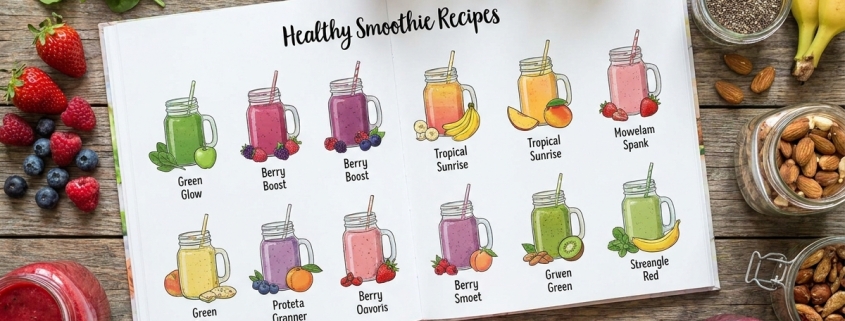
10 Healthy Smoothie Recipes to Try at Home

These 10 healthy smoothie combinations give you plenty of variety. Each recipe uses accessible ingredients and can be adjusted according to your preferred texture and sweetness.

1. Banana Peanut Butter Smoothie for a Filling Breakfast

The banana peanut butter smoothie is a classic combination because it delivers a naturally creamy texture and rich flavor while combining carbohydrates, protein, and healthy fats.

Ingredients

  • 1 ripe banana
  • 1 tablespoon natural peanut butter
  • ¾ cup unsweetened milk
  • ¼ cup plain Greek yogurt
  • 1 tablespoon rolled oats
  • A pinch of cinnamon
  • Ice, if desired

How to Make It

Add all the ingredients to a blender and blend until smooth. If the mixture is too thick, add a little more milk. If you prefer a colder smoothie, add several ice cubes before blending.

Bananas provide natural sweetness and a creamy consistency, while peanut butter adds richness. Greek yogurt contributes protein, and oats add fiber and texture.

This smoothie works particularly well for breakfast because it is more substantial than a simple fruit drink. You can also add a teaspoon of chia seeds for additional fiber.

2. Berry Yogurt Smoothie for an Antioxidant-Rich Drink

A berry yogurt smoothie combines the bright flavor of berries with creamy yogurt to create a refreshing drink that works well for breakfast or an afternoon snack.

Ingredients

  • 1 cup mixed berries
  • ½ cup plain Greek yogurt
  • ¾ cup unsweetened milk
  • 1 tablespoon chia seeds
  • ½ banana
  • Ice, if desired

How to Make It

Place everything into a blender and blend until creamy. Frozen berries work especially well because they create a thick, cold smoothie without requiring much ice.

Strawberries, blueberries, raspberries, and blackberries all work well in this recipe. Berries are naturally flavorful, so there is usually little need for added sugar.

For an even thicker smoothie, reduce the amount of liquid. You can also add a spoonful of oats if you want more fiber and a more filling texture.

3. Green Spinach Smoothie for an Easy Vegetable Boost

Green smoothies offer a simple way to include leafy vegetables in your daily meals. Spinach has a mild flavor, making it especially easy to combine with sweet fruits.

Ingredients

  • 1 cup fresh spinach
  • 1 banana
  • ½ cup pineapple
  • ¾ cup unsweetened milk or water
  • 1 tablespoon chia seeds
  • Small piece of fresh ginger
  • Ice

How to Make It

Blend the liquid, spinach, banana, pineapple, ginger, and chia seeds until completely smooth. Add ice and blend again if you want a colder drink.

Pineapple and banana provide sweetness that balances the earthy taste of spinach. Ginger adds a fresh, slightly spicy flavor.

If you are new to green smoothies, start with a smaller amount of spinach and gradually increase it as you become comfortable with the flavor.

4. Mango Coconut Smoothie for a Tropical Refreshment

When you want something bright and refreshing, a mango coconut smoothie brings tropical flavors together in a simple combination.

Ingredients

  • 1 cup ripe or frozen mango
  • ¾ cup unsweetened coconut milk beverage
  • ½ banana
  • ½ cup plain yogurt
  • 1 tablespoon ground flaxseed
  • Ice

How to Make It

Blend all ingredients until smooth and creamy. Frozen mango can make the smoothie especially thick and refreshing.

Mango provides natural sweetness and a vibrant color, while yogurt adds protein and creaminess. Flaxseed contributes fiber and healthy fats.

For a slightly tangier flavor, add a small squeeze of fresh lime juice.

5. Avocado Spinach Smoothie for Creamy Healthy Fats

Avocado gives smoothies a naturally creamy consistency without requiring heavy cream or large amounts of dairy.

Ingredients

  • ½ ripe avocado
  • 1 cup spinach
  • ½ banana
  • ¾ cup unsweetened milk
  • 1 tablespoon chia seeds
  • A small squeeze of lime juice
  • Ice

How to Make It

Blend all ingredients until smooth. Add additional liquid gradually if the smoothie becomes too thick.

Avocado contributes healthy fats and creates a silky texture. Spinach adds vegetables, while banana provides natural sweetness.

The lime juice helps brighten the flavor and prevents the combination from tasting too heavy.

6. Oatmeal Banana Smoothie for a Quick Breakfast

An oatmeal smoothie can be especially useful when you want a quick breakfast that feels more substantial than a fruit-only drink.

Ingredients

  • 1 banana
  • ¼ cup rolled oats
  • ¾ cup unsweetened milk
  • ½ cup plain Greek yogurt
  • 1 tablespoon peanut or almond butter
  • ½ teaspoon cinnamon
  • Ice

How to Make It

Add the oats and liquid to the blender first. Then add the remaining ingredients and blend until smooth.

Oats provide complex carbohydrates and fiber, while yogurt and nut butter help increase protein and satiety. Cinnamon adds warmth and flavor without needing additional sweeteners.

For a smoother consistency, let the oats soak in the milk for a few minutes before blending.

7. Pineapple Ginger Smoothie for a Refreshing Fruit Combination

Pineapple and ginger create a refreshing flavor combination that is especially appealing on warm days.

Ingredients

  • 1 cup pineapple chunks
  • ½ banana
  • ¾ cup unsweetened yogurt or milk
  • Small piece of fresh ginger
  • 1 tablespoon chia seeds
  • Ice

How to Make It

Blend the pineapple, banana, liquid, ginger, and chia seeds until smooth. Add ice and blend again.

Pineapple brings a naturally sweet and tangy flavor, while ginger provides a warming contrast. Chia seeds add texture and fiber.

If you prefer a thinner smoothie, increase the liquid slightly.

8. Chocolate Banana Protein Smoothie for a Healthier Sweet Treat

Chocolate does not have to mean an overly sugary drink. Unsweetened cocoa powder can provide rich chocolate flavor while allowing you to control the amount of added sugar.

Ingredients

  • 1 banana
  • 1 tablespoon unsweetened cocoa powder
  • ¾ cup unsweetened milk
  • ½ cup Greek yogurt
  • 1 tablespoon peanut butter
  • 1 tablespoon rolled oats
  • Ice

How to Make It

Blend all ingredients until smooth and creamy. Add a little more milk if necessary.

The banana provides natural sweetness, while cocoa delivers the chocolate flavor. Greek yogurt and peanut butter help make the smoothie more filling.

For a stronger chocolate taste, add another small amount of unsweetened cocoa powder rather than adding sugar.

9. Carrot Orange Smoothie for a Colorful Vitamin-Rich Drink

Carrots and oranges create a naturally bright smoothie with a refreshing citrus flavor.

Ingredients

  • 1 small carrot, chopped
  • 1 orange, peeled
  • ½ banana
  • ½ cup plain yogurt
  • ½ cup water
  • Small piece of fresh ginger
  • Ice

How to Make It

Chop the carrot into small pieces so your blender can process it more easily. Add all ingredients and blend until smooth.

The orange provides citrus flavor and natural sweetness, while carrot adds vegetables and a vibrant color. Ginger gives the drink a refreshing kick.

If your blender struggles with raw carrot, grate the carrot first or lightly steam it and allow it to cool before blending.

10. Strawberry Chia Smoothie for a Fiber-Focused Snack

Strawberries and chia seeds make a simple combination that is flavorful, colorful, and easy to prepare.

Ingredients

  • 1 cup strawberries
  • ½ banana
  • ¾ cup unsweetened milk
  • ½ cup Greek yogurt
  • 1 tablespoon chia seeds
  • A few drops of vanilla extract
  • Ice

How to Make It

Blend the strawberries, banana, milk, yogurt, chia seeds, vanilla, and ice until smooth.

The strawberries provide a naturally sweet and refreshing flavor, while chia seeds add fiber and healthy fats. Greek yogurt also contributes protein and creates a creamy consistency.

For a thicker smoothie bowl, reduce the liquid and add toppings such as sliced strawberries, oats, or chopped nuts.

How to Make Your Smoothies Healthier Without Sacrificing Flavor

A few simple changes can transform an ordinary smoothie into a more balanced meal or snack. First, choose whole fruits instead of fruit juice. Whole fruit provides fiber and generally makes the smoothie more satisfying.

Next, avoid automatically adding sugar, honey, or syrup. If your smoothie tastes too tart, start with a ripe banana, mango, dates, or another naturally sweet fruit. You may discover that you need far less added sweetener than expected.

You should also include a protein source when you want your smoothie to keep you full. Greek yogurt, plain yogurt, soy milk, tofu, or nut butter can all help.

Finally, remember that more ingredients do not necessarily mean a healthier smoothie. A simple combination of fruit, vegetables, protein, fiber, and healthy fat can be more useful than blending ten or fifteen ingredients together.

Common Healthy Smoothie Mistakes to Avoid

One common mistake is turning a smoothie into a liquid dessert by combining several sweet ingredients with juice, sweetened yogurt, honey, and flavored milk. Although the drink may taste delicious, the overall sugar and calorie content can rise quickly.

Another mistake is leaving out protein. A fruit-only smoothie may taste refreshing but may not keep you satisfied for very long. Adding yogurt, soy milk, tofu, or nut butter can create a more balanced drink.

Using too much nut butter, avocado, oats, or other calorie-dense ingredients can also make portions larger than intended. These foods can absolutely fit into a healthy diet, but moderation still matters.

Finally, do not rely exclusively on smoothies for your fruit and vegetable intake. Whole foods still have an important place in a balanced diet because eating them provides chewing, texture, and variety.

Tips for Preparing Healthy Smoothies Faster

Smoothie preparation does not have to become a daily chore. You can save time by washing and chopping fruits and vegetables ahead of time.

Create freezer packs containing measured portions of banana, berries, mango, pineapple, spinach, or other ingredients. When you need a smoothie, simply place a prepared pack into the blender and add your liquid and protein source.

You can also keep staples such as oats, chia seeds, flaxseed, cocoa powder, peanut butter, and cinnamon readily available.

For busy mornings, prepare the ingredients the night before and refrigerate them. However, avoid storing blended smoothies for unnecessarily long periods. Freshly blended smoothies generally provide the best texture and flavor.

How to Customize Smoothie Recipes for Your Goals

The best smoothie recipe is one that fits your eating pattern and preferences. If you want a breakfast smoothie, make it more substantial by including protein, fiber, and healthy fats.

If you want a lighter snack, use a smaller portion and focus on fruit or vegetables with a modest protein source.

For people who prefer dairy-free options, replace regular milk and yogurt with unsweetened soy milk, almond milk, oat milk, coconut-based alternatives, or suitable plant-based yogurt.

You can also adjust the thickness. More liquid produces a thinner drink, while frozen fruit, yogurt, oats, chia seeds, and avocado create a thicker consistency.

Most importantly, experiment. Try different fruit combinations, rotate your leafy greens, and use seasonal ingredients whenever possible.

Make Healthy Smoothies a Simple Part of Your Routine

Healthy smoothies can make nutritious eating easier without making it complicated. You do not need expensive ingredients, complicated recipes, or a long list of supplements to create a satisfying smoothie. A few basic whole foods can provide plenty of flavor and nutritional variety.

The 10 combinations in this guide give you a starting point, but you can easily create your own recipes. Try pairing berries with yogurt and chia seeds, mango with spinach and ginger, or banana with oats and nut butter.

The most useful approach is to think about balance rather than perfection. Include fruits or vegetables, add a protein source, incorporate fiber, and choose healthy fats where appropriate. Then adjust the flavor and consistency until you find combinations you genuinely enjoy.

Once you discover a few favorites, smoothie preparation can become one of the easiest ways to support a varied and nutritious eating routine.

Frequently Asked Questions About Healthy Smoothie Recipes

Are homemade smoothies healthy?

Yes. Homemade smoothies can be nutritious when they emphasize whole fruits, vegetables, protein, fiber, and healthy fats. The main thing to watch is the amount of added sugar and calorie-dense ingredients.

What is the healthiest thing to put in a smoothie?

There is no single healthiest ingredient. A balanced combination is more important. Fruits, leafy vegetables, plain yogurt, soy milk, oats, chia seeds, flaxseeds, nuts, and nut butter can all contribute useful nutrients.

Are smoothies good for breakfast?

A well-balanced smoothie can work well as breakfast. Include protein and fiber alongside fruit or vegetables so the drink is more satisfying.

Can I drink a smoothie every day?

Many people can enjoy a smoothie regularly as part of a varied diet. However, variety matters. Rotate your fruits, vegetables, protein sources, and other ingredients instead of consuming exactly the same combination every day.

How can I make a smoothie without adding sugar?

Use naturally sweet fruits such as ripe bananas, mangoes, pineapple, or berries. Also choose unsweetened milk and plain yogurt rather than sweetened varieties.

Are green smoothies actually healthy?

Green smoothies can be a convenient way to include leafy vegetables. However, their nutritional value depends on the complete recipe. A smoothie containing spinach, fruit, protein, and fiber is generally more balanced than one made mostly from fruit juice.

What can I use instead of milk in smoothies?

You can use water, unsweetened soy milk, almond milk, oat milk, coconut-based beverages, or other suitable alternatives. Your choice will affect the flavor, texture, and nutritional profile.

How do I make a smoothie more filling?

Add protein and fiber. Greek yogurt, soy milk, tofu, nut butter, oats, chia seeds, and flaxseeds are useful options. You can also include avocado for a creamy texture and healthy fats.

Can I use frozen fruit for smoothies?

Absolutely. Frozen fruit can make smoothies cold and creamy while reducing the need for ice. Frozen berries, bananas, mangoes, and pineapple are particularly convenient.

What is a good healthy smoothie for weight management?

Rather than relying on one specific smoothie, focus on balanced portions. Choose whole fruit, vegetables, a protein source, and fiber while limiting added sugars and oversized portions of calorie-dense ingredients. Your overall eating pattern matters more than one smoothie.